

The flare up in the Middle East is not another local conflict, but the “trigger” for the definitive collapse of the international security architecture we have known for decades.
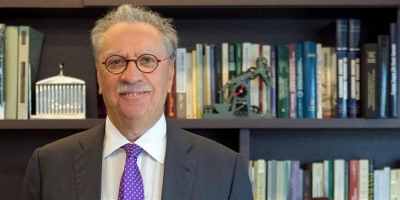
As noted in his article by Michalis Sallas, Chairman of Lyktos Group, Honorary Chairman of Piraeus Bank, former university professor, the crisis in Iran is being instrumentalized to weaken the institutional pillars of the West: the UN is being led into a credibility crisis due to American interventions, the cohesion of NATO is shaken by the policy of Trump that puts European security at risk, while the European Union is trapped between internal contradictions and a coordinated attempt to undermine its economic base.
With energy and shipping turning into weapons, Europe is threatened with strategic annihilation, called to choose whether it will remain a passive observer of American ambitions or claim its autonomy before the economic and social cost becomes irreversible.
End of global balance
The global balance that we have known over the past seventy years is being shaken and the certainties on which European prosperity and international stability were built are receding.
The great powers now move with raw geopolitical logic, redraw spheres of influence and restore power as the main instrument of policy.
Geopolitical instability is not a temporary phenomenon but a substantial transformation of the international system, while international institutions that functioned as balancing mechanisms appear unable to impose rules.
In this new environment Europe must decide whether it will remain an observer or evolve into an autonomous geopolitical pole.
Crisis of credibility for the UN
The United Nations is facing a crisis of credibility and effectiveness, as the Security Council is unable to impose solutions due to American interventions in major conflicts and the vetoes of powerful states freezing critical decisions.
International legality recedes before political expediency and small and medium sized states see the margins of diplomatic protection shrinking. The vacuum that is created does not remain neutral but is filled by the great powers (United States – Russia – China) to the detriment of the remaining countries.
At the same time the cohesion of NATO is being tested, because the alliance that was based on a common strategic perception, that there would be an American security guarantee and correspondingly Europe would support the international role of the dollar and the political hegemony of the United States, is being overturned by the policy of President Trump.
The possible weakening of transatlantic cohesion will drastically change the security balances in Europe, increasing the sense of exposure for states on the eastern flank and leading to higher defense budgets that will limit social and development spending.
On the other hand a substantial reaction from Europe would mathematically lead to the collapse of the American economy, with consequences for the global market.
Geopolitical instability and the EU
The European Union constitutes the largest project of peaceful and economic integration of the continent, as the single market and the common currency created prosperity and stability for decades.
However internal imbalances remain intense, since different productive models, unequal fiscal capacities and divergent energy needs make common decision making difficult and strengthen national entrenchments.
Additionally the situation is burdened by the encouragement of certain countries by the United States to strengthen and support the contradictions expressed by certain countries within the EU.
Geopolitical instability and the behavior of great powers also cause serious economic disruptions, because sanctions, trade wars, energy upheavals and monetary conflicts increase instability in the markets.
This situation creates profit opportunities for a few who have access to networks, energy and technological superiority, while at the same time it erodes citizens’ incomes, increases the cost of living and widens social inequalities in all countries.
Uncertainty functions as a mechanism of redistribution in favor of the powerful and at the expense of social cohesion
In the case of further weakening of the European Union the economic cost would be particularly heavy, because the internal market would face new obstacles, supply chains would be disrupted and the common currency would come under pressure.
Investments would decline due to the lack of predictability and Europe would risk turning into a field of competition for third powers, losing the ability for autonomous strategic action.
The escalation in the Middle East is not another regional flare up that will partially de escalate and then be forgotten.
It is a stress test for the international security architecture and at the same time a multiplier of economic risk for Europe.
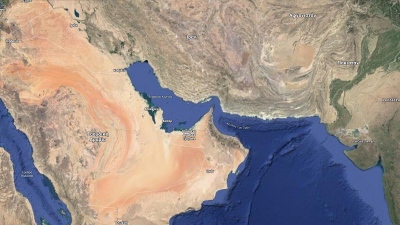
In a world where about 20% of the global oil flow passes through the Strait of Hormuz and a significant portion of LNG passes through high risk maritime zones, geopolitics translates instantly into prices, interest rates and public debt.
If the price of Brent stabilizes at higher levels for six months, global growth could be limited or reduced by at least half a percentage point.
Every increase of 10 dollars per barrel of oil reduces global GDP by 0.2 points.
For the eurozone, which already moves around 1%, this would amount to marginal stagnation.
Europe remains a net importer of energy and exposed to supply disruptions
In 2022, when natural gas prices exceeded 300 euros per megawatt hour, inflation reached almost 10%. A new, smaller but persistent shock would be enough to keep inflation above the target of the European Central Bank, for much longer than the continent can politically endure.
Fiscal consequences are equally serious.
Public debt in the eurozone moves close to 90% of GDP, while in some countries it exceeds 140%.
With interest rates two or three percentage points higher compared with the previous decade, every new issuance of debt is more expensive.
If defense spending increases by half a percentage point of GDP due to geopolitical pressure, the additional interest cost over a five year horizon will amount to many billions of euros annually.
The discussion for 2% of GDP in NATO has already been surpassed by reality.
The trend is moving toward 3%, without a clear strategy for amortizing this cost.
The European Union insists on addressing each crisis in a fragmented way
Energy crisis, temporary subsidies.
Pandemic, temporary recovery fund.
War, emergency flexibility clauses.
The lack of a permanent common defense and energy policy increases the long term cost.
Europe spends significant amounts overall on defense, but with fragmented national programs that lack economies of scale.
In the field of energy, progress in renewable sources is real but not sufficient to drastically reduce dependence on unstable regions within the next decade.
Geopolitical instability also operates through foreign exchange markets
In periods of tension, the dollar strengthens.
A weaker euro means more expensive imports of energy and raw materials.
The combination of high oil prices and a strong dollar constitutes a double blow for European industry.
If risk premiums in shipping increase by 30 or 40%, transport costs will directly burden supply chains.
At a time when European competitiveness is already being tested due to United States subsidies for its industry, combined with its cheaper energy cost, the pressure on Europe will intensify.
The conclusion is strict and unavoidable
The greatest threat to the West is not only the military escalation in the Middle East.
It is the gradual erosion of its institutional and economic base by the United States.
If the UN weakens further and if the cohesion of NATO depends exclusively on the internal politics of the United States, then Europe cannot remain a passive recipient of developments.
Geopolitical uncertainty is not temporary. It is the new normal.
Whoever does not invest now in strategic autonomy, energy security and institutional deepening will later pay a much higher price.
Europe still has the economic capacity to adapt.
The question is whether it has the political will.
www.bankingnews.gr






Σχόλια αναγνωστών